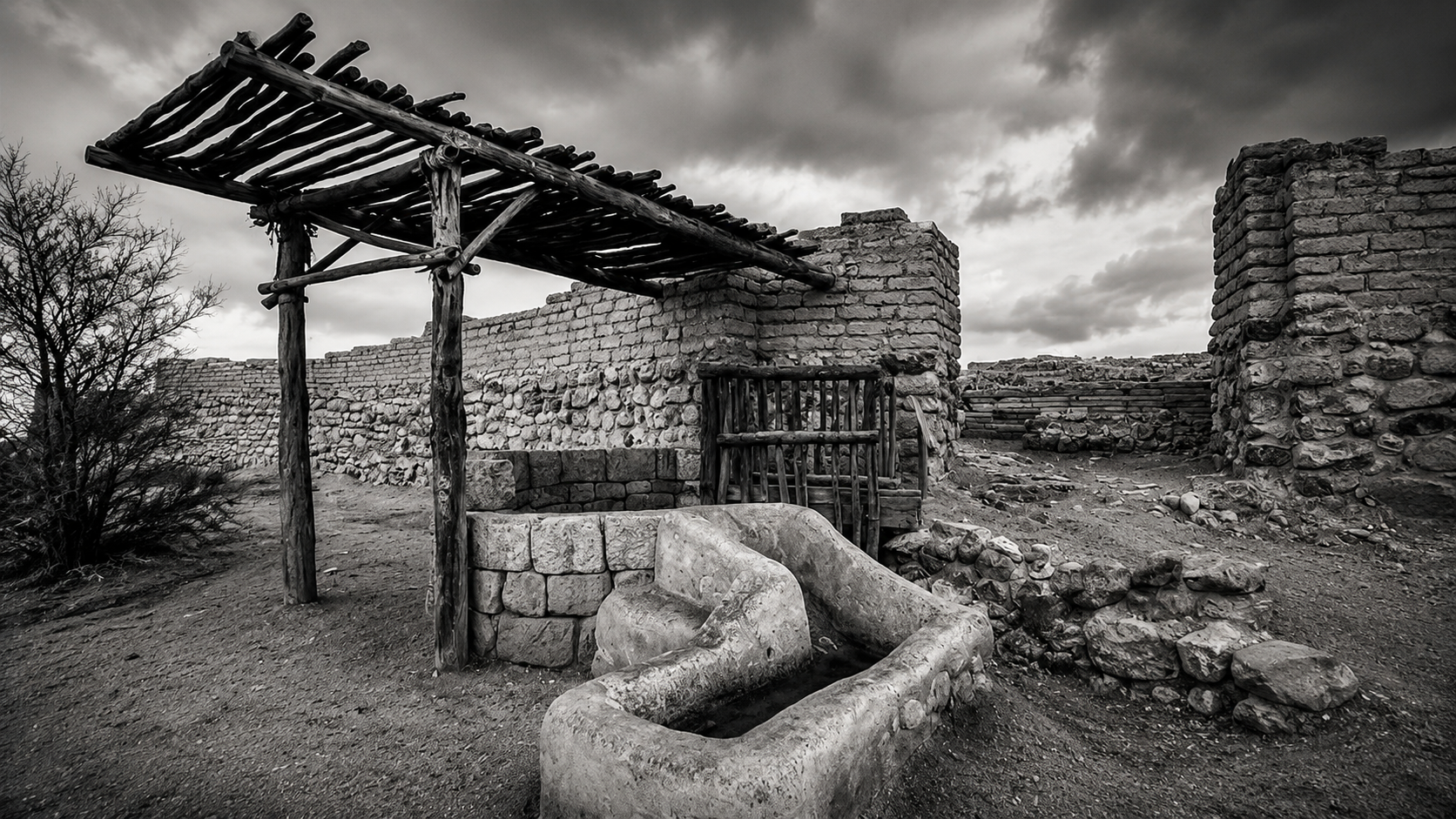
Where Is the Land of the Patriarchs?
The land of the patriarchs isn't a single place on a map — it's a system of wells, ridges, watershed corridors, and movement thresholds stretching from Mesopotamia through Harran into Canaan and beyond. Abraham crossed it. Jacob was caught at one of its narrowest points. Hagar survived in its wilderness. Moses died within sight of its final approach.
This page follows that land as a physical system, not a backdrop — and traces how each of these journeys fits into it.
A Terrain-First Reconstruction of the Abrahamic Landscape
Could remembered guidance also preserve the memory of a physical route?
That question is where this research began. Not with hydrology. Not with GIS. Not with sacred stones. With a simpler question: whether something remembered as guidance might also preserve the memory of a physical route through a real world.
Once that question was asked, the earlier prophetic traditions began to look different. Abraham travels. Ishmael is placed in the wilderness. Jacob crosses the Yabboq. Joseph's household is driven into Egypt by famine. Moses moves through wells, mountains, settlements, and contested territory.
These stories do not remember prophets moving through abstract religious space. They remember people moving through roads, water sources, river crossings, mountain corridors, settlements, borders, and territories.
Following the Clues Through the Traditions
Abraham — What does it mean to leave one territory, move through another, establish sacred sites, negotiate access, and receive a covenant involving land and descendants?
Hajar and Ismail — Is the place merely narrative setting, or does the remembered geography preserve something about movement, refuge, water, and territorial placement?
→ Where Did Hagar and Ishmael Live?
Yitzhak and Gerizim — What happens when that location is examined in relation to elevation, watershed structure, and movement corridors?
Jacob and the Yabboq — Why does Jacob's return culminate at a river crossing? What changes when the Yabboq is treated as a real geographic threshold?
→ Where Did Jacob Cross the Jabbok?
Joseph and Famine — What happens when environmental pressure forces a household into the administrative machinery of Egypt?
Wells — In the ancient world, wells could mark survival, access, negotiation, and territorial claim.
→ Where Are the Wells of Abraham?
Together, these are fragments of the physical world remembered in the Torah and Qur'an — a world of movement, thresholds, corridors, and contested ground.
Which raises the question this project is now asking of Muhammad's tradition too:
→ Was Muhammad Shown a Physical Path?
Continue the Investigation
See the method behind this investigation →
/hydrological-thresholds
Read the book →
/we-were-not-looking