Where Is Mount Gerizim?
The mountain above Shechem and the geography of covenant memory.
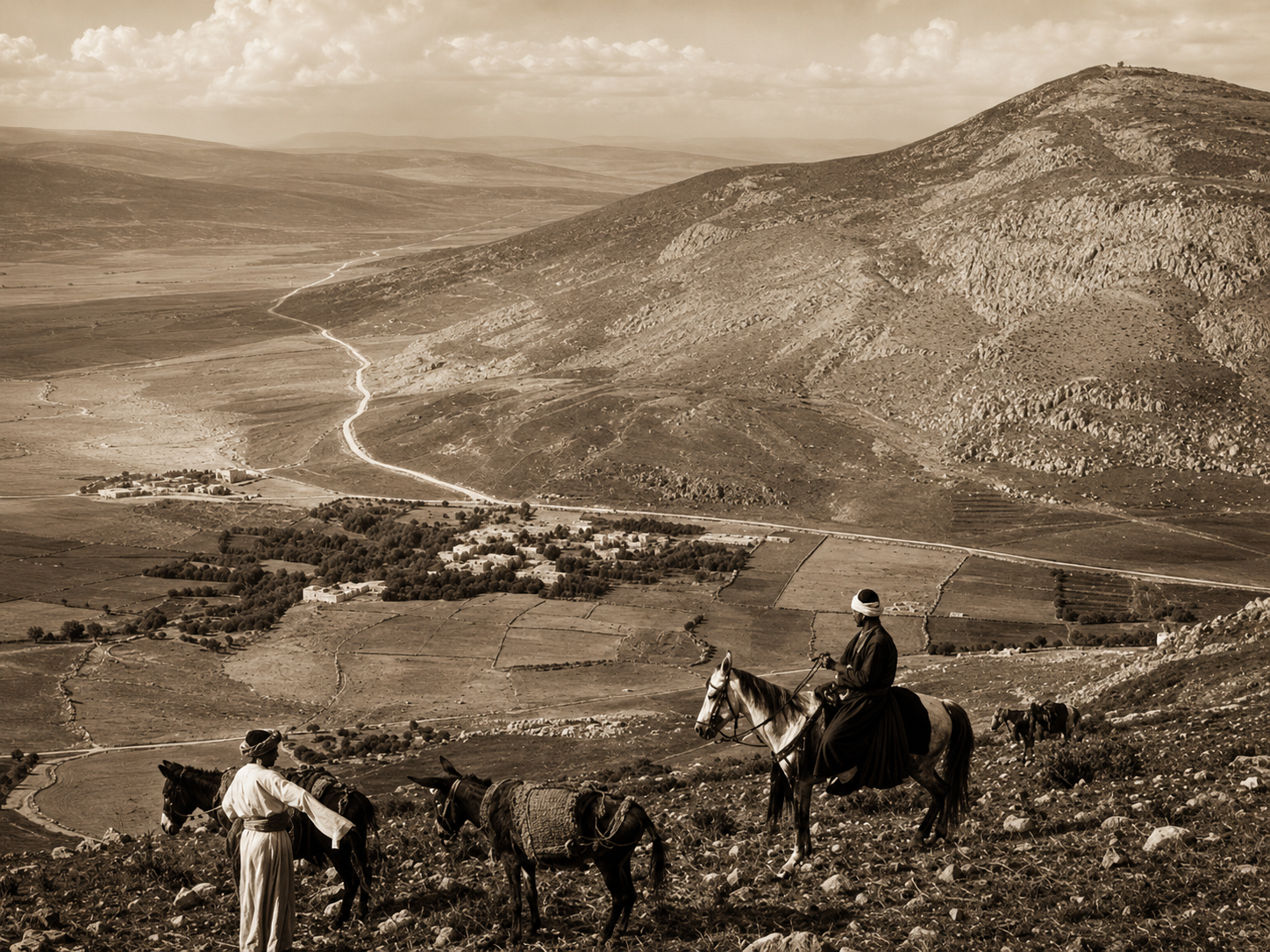
Mount Gerizim rises above the ancient city of Shechem in the central highlands of the southern Levant. It is remembered as a mountain of blessing, covenant, and sacred assembly.
Mount Gerizim also became the central sacred mountain of the Samaritan tradition, where its religious significance continues into the present. But before Gerizim became a theological landscape, it was a physical one.
Why did this mountain, overlooking one of the region’s important highland corridors, become a place people repeatedly associated with covenant and sacred memory?
Its location matters. Gerizim stands above a spring‑fed corridor where routes, settlements, watersheds, and political territories converge.
Gerizim as a Physical Threshold
Gerizim does not stand in isolation. It rises beside Mount Ebal above the Shechem saddle — a natural passage through the central highlands.
That setting gives the mountain geographic significance before symbolic meaning is added. Movement through the region is shaped by elevation, water access, and the narrow corridor between the surrounding highlands.
Sacred activity at Gerizim therefore occurred within a landscape already important for movement, gathering, and territorial presence.
Why the Watershed Matters
Gerizim occupies a highland environment where drainage, springs, ridgelines, and route convergence are closely related.
The broader research question is whether sacred memory repeatedly clusters around places where the physical landscape concentrates movement and access.
Gerizim is especially important to that question because the mountain, the Shechem corridor, and the surrounding watershed form one interconnected geographic system.
So Where Is Mount Gerizim?
Mount Gerizim rises south of ancient Shechem, overlooking the modern city of Nablus in the central West Bank.
Its importance is not only its elevation. It overlooks a major highland corridor and forms part of a paired mountain landscape with Mount Ebal.
Gerizim therefore sits at the intersection of sacred memory, watershed structure, and regional movement.
Part of a Larger Investigation
Gerizim and Shechem form one geographic node within a larger system of highland corridors, watersheds, wells, migration routes, and sacred territorial memory across the patriarchal world.
Explore the larger reconstruction: Where Is the Land of the Patriarchs? →